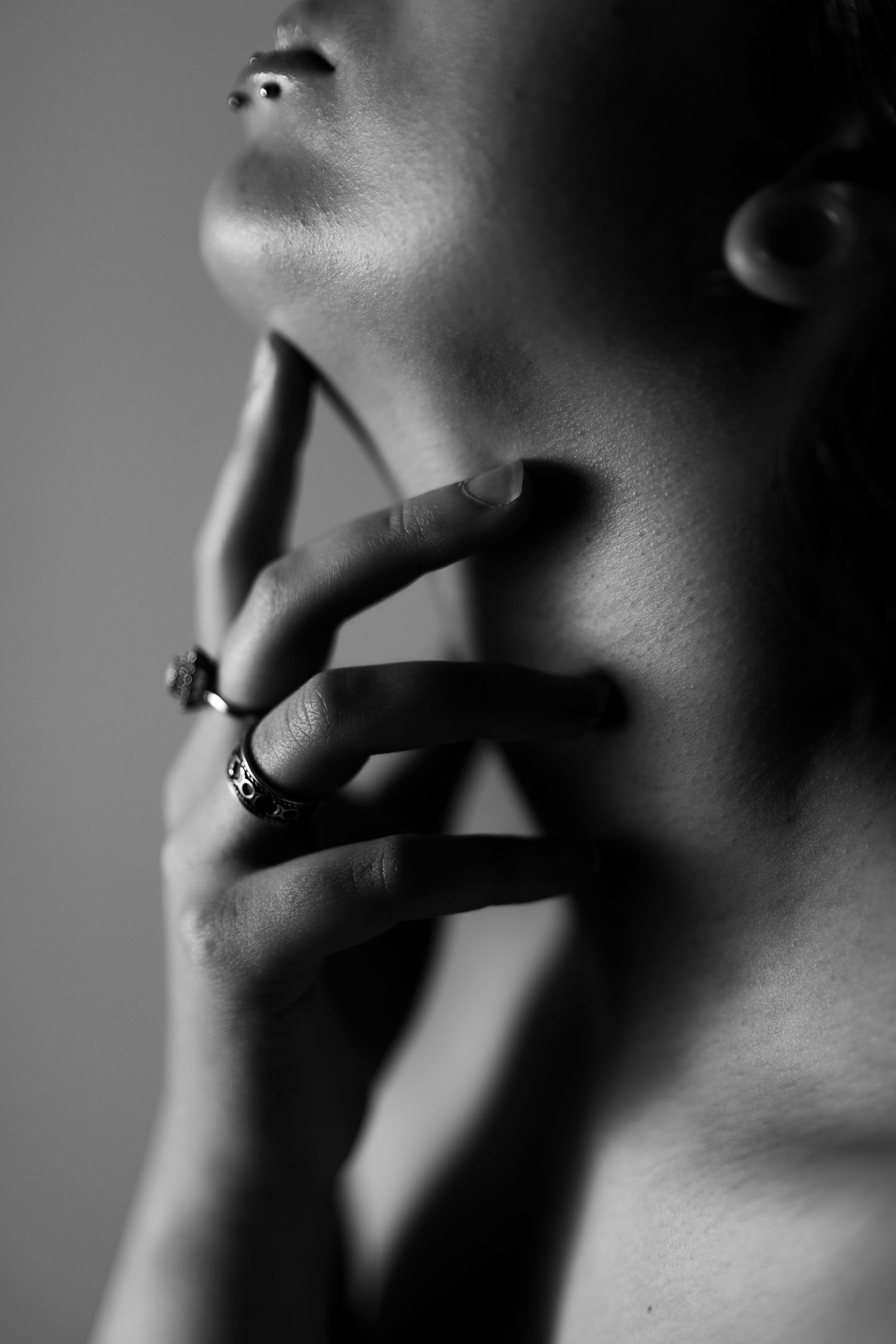
Color Contrast: Using Gels for Bold Editorial Portraits
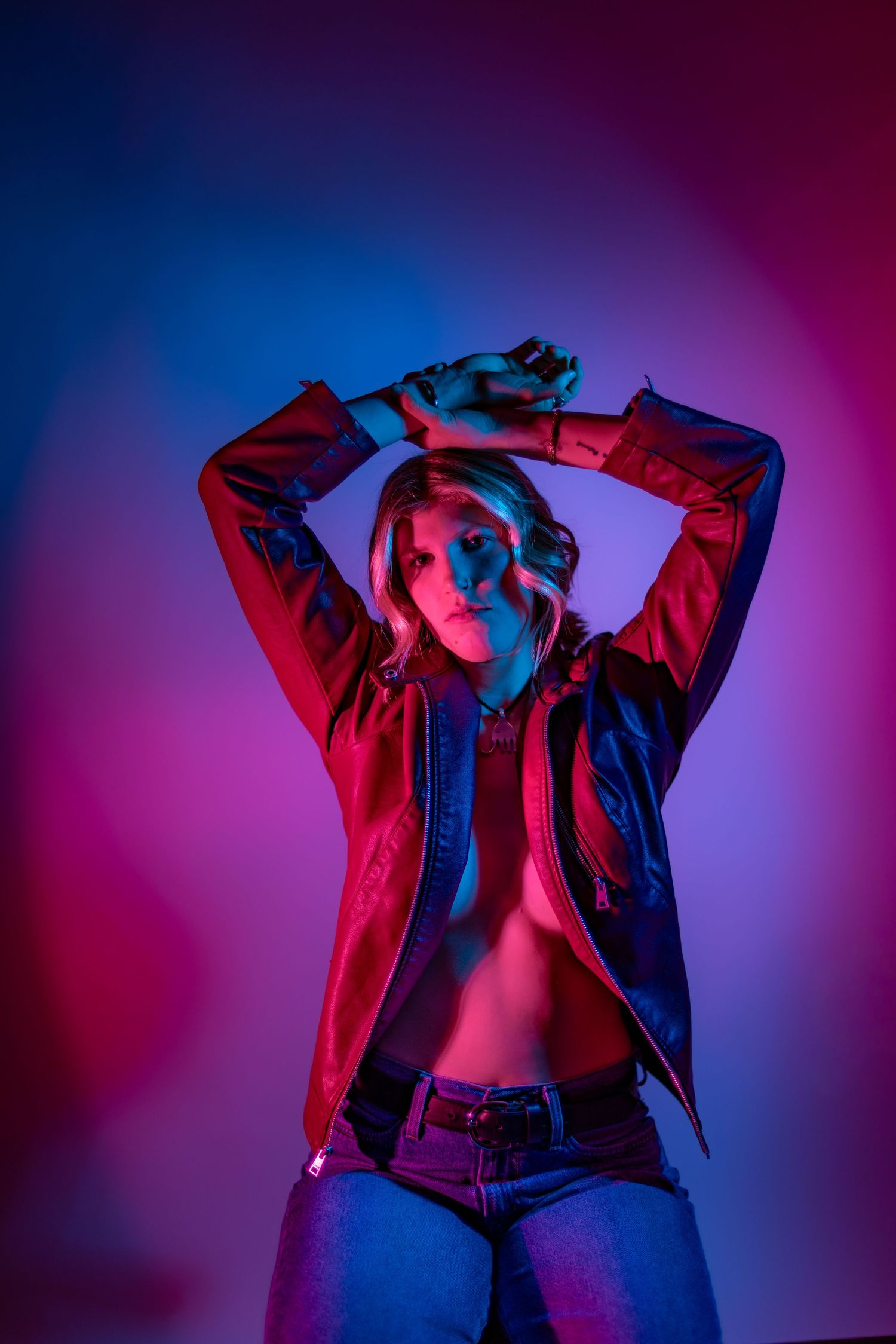
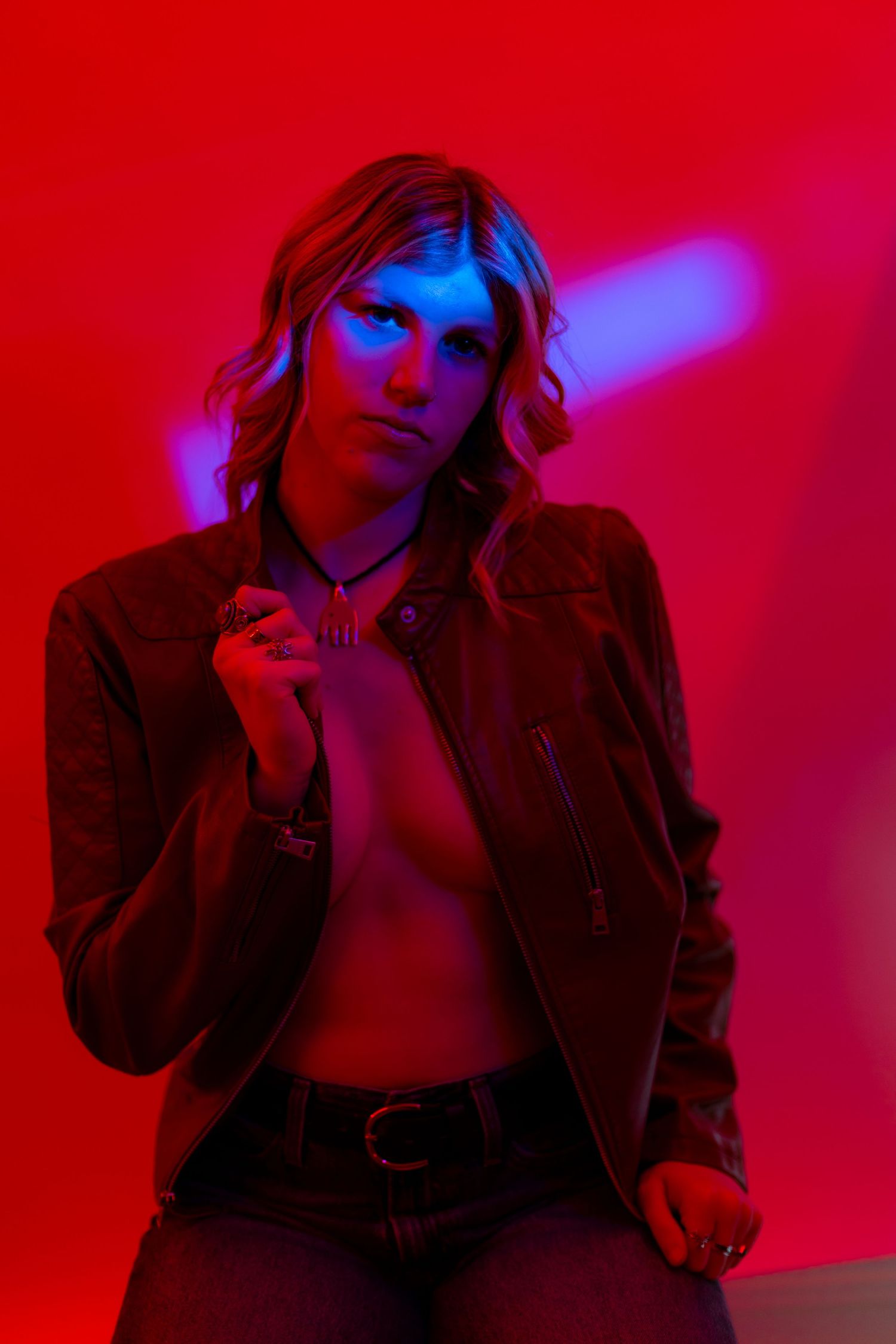
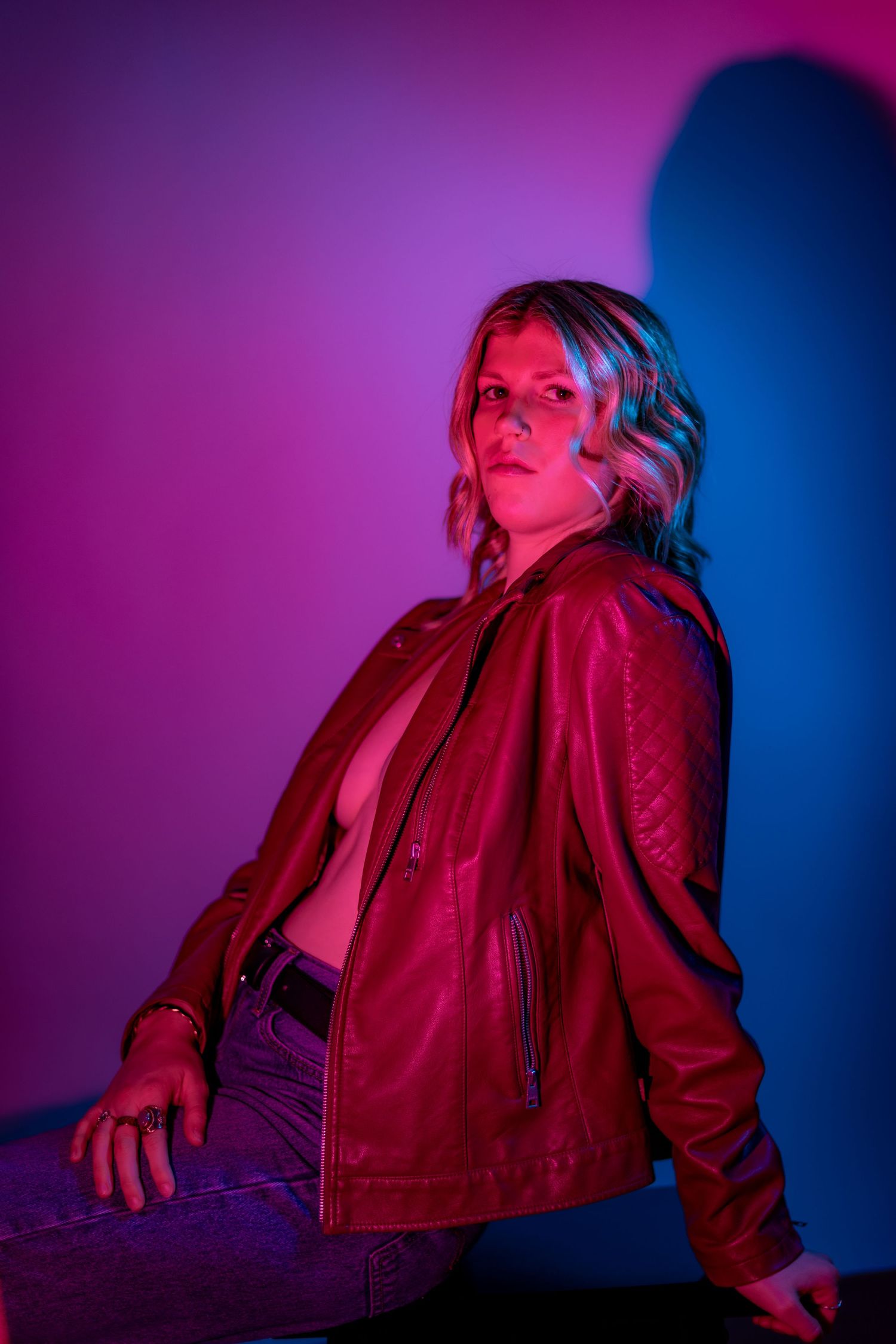
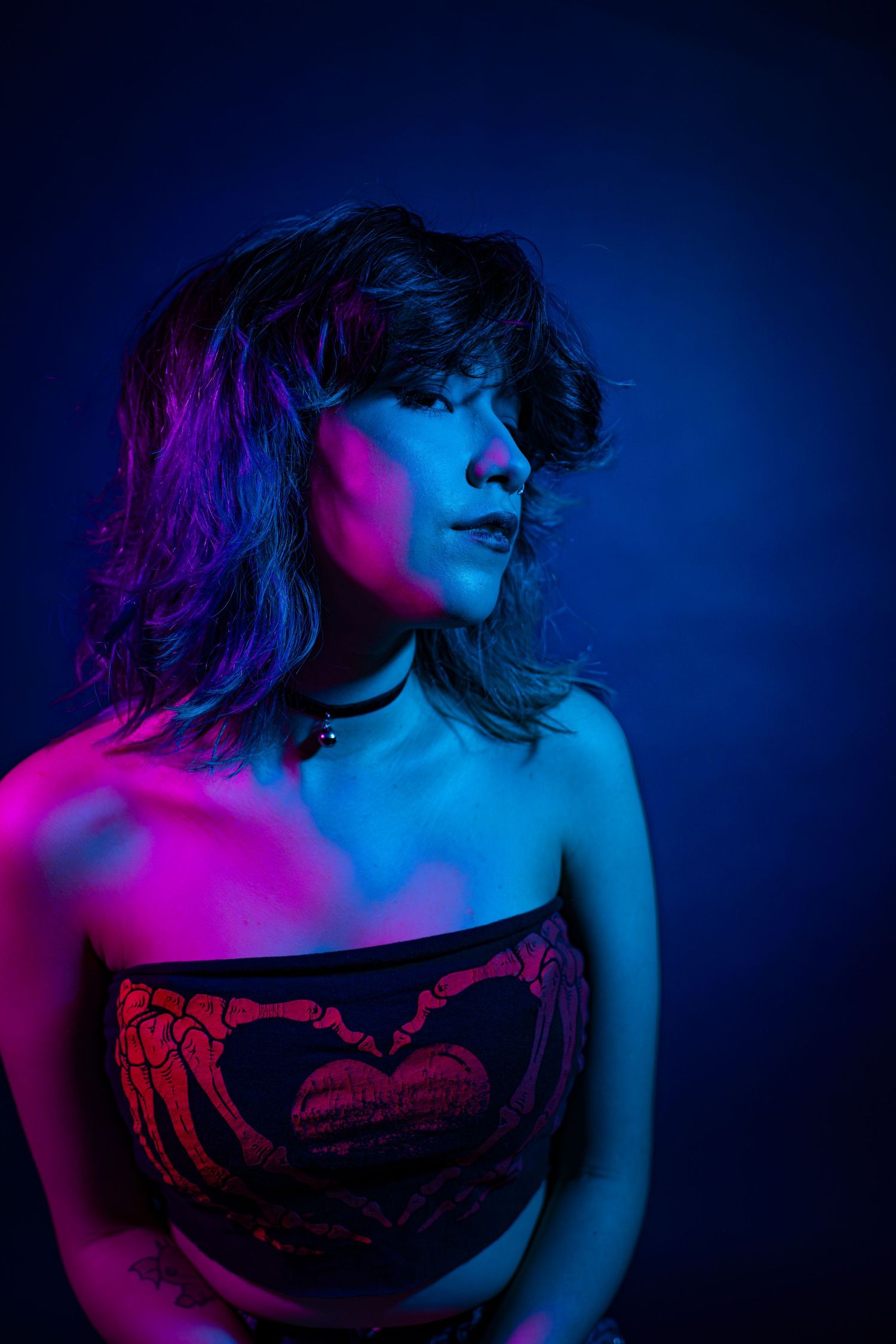
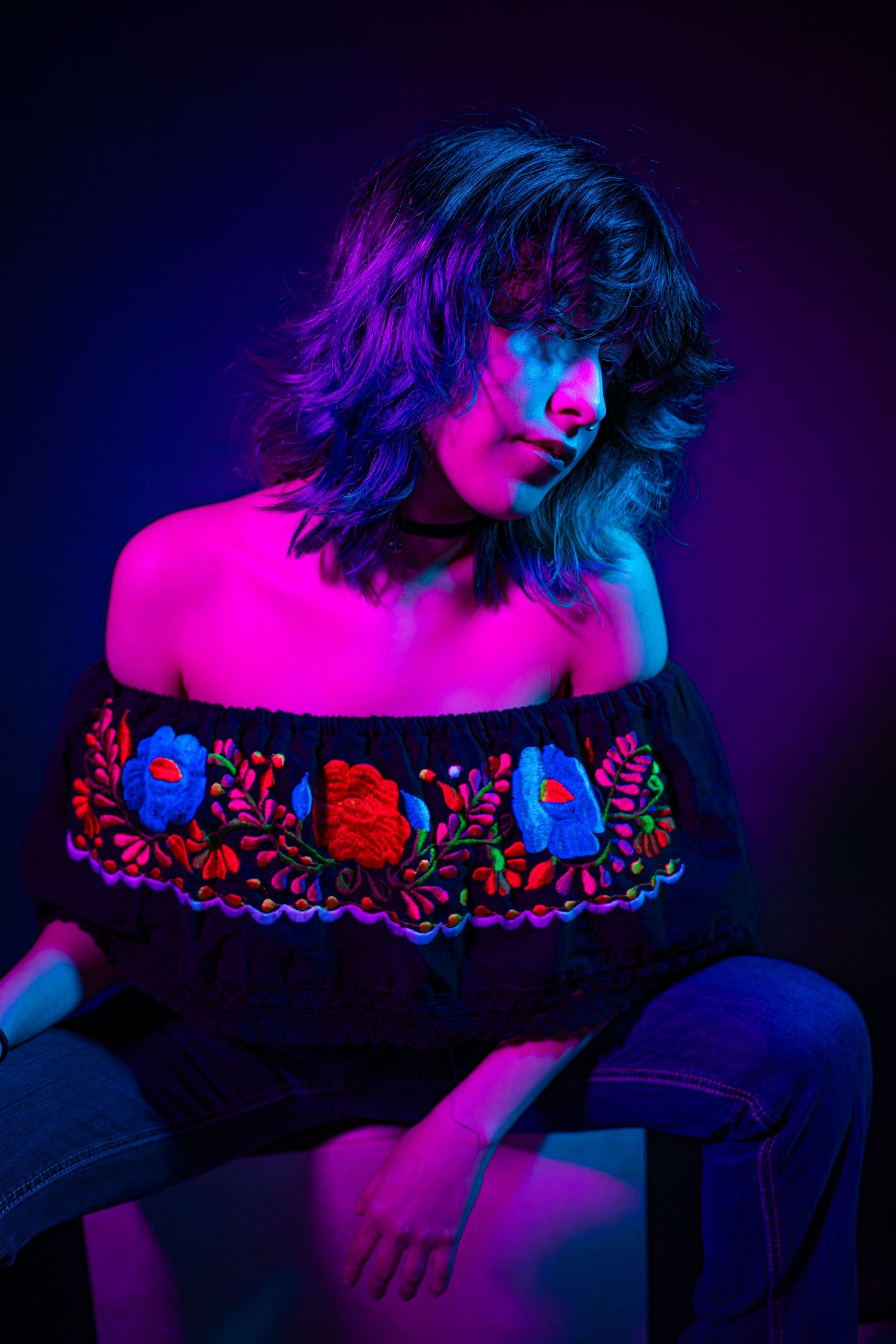
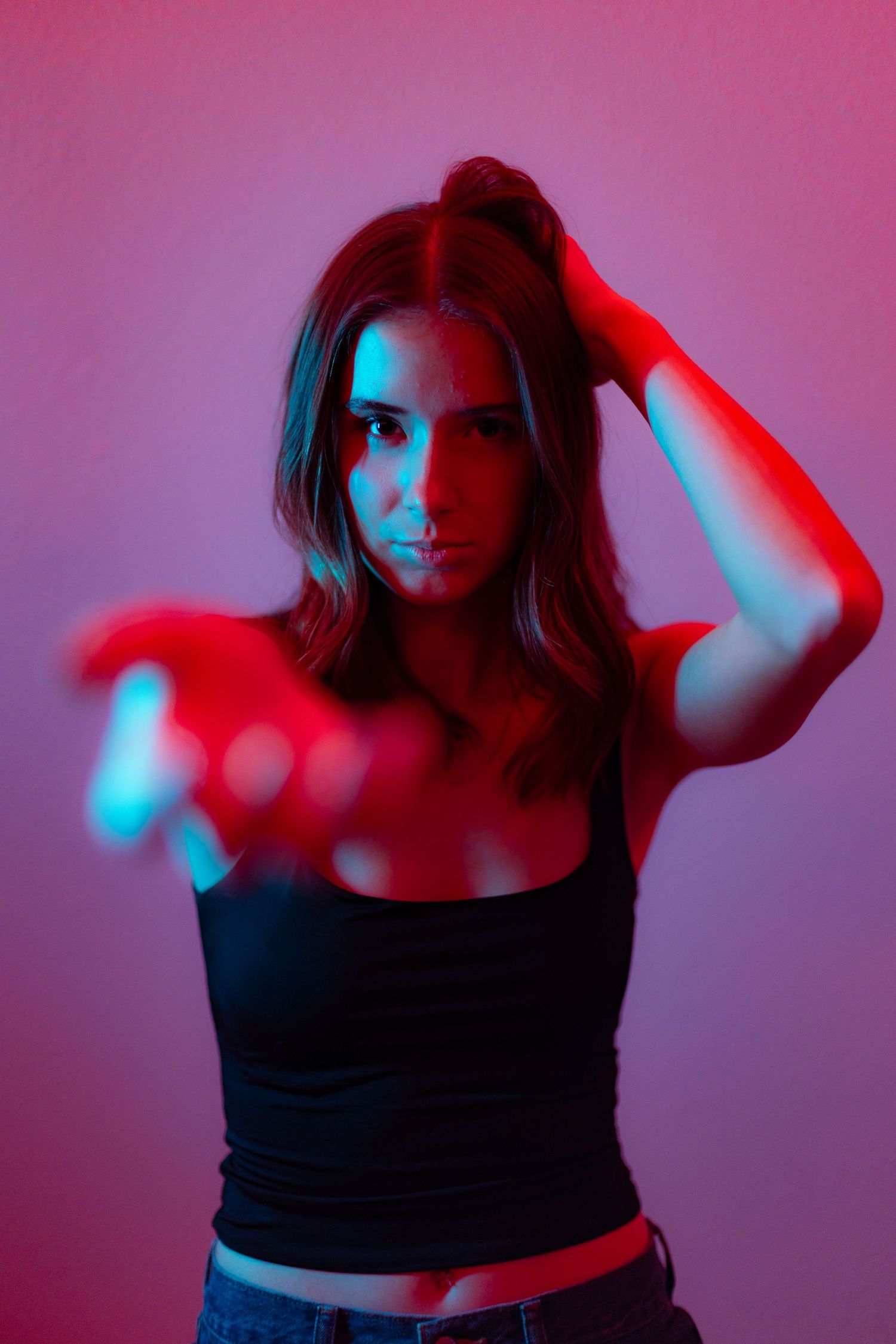
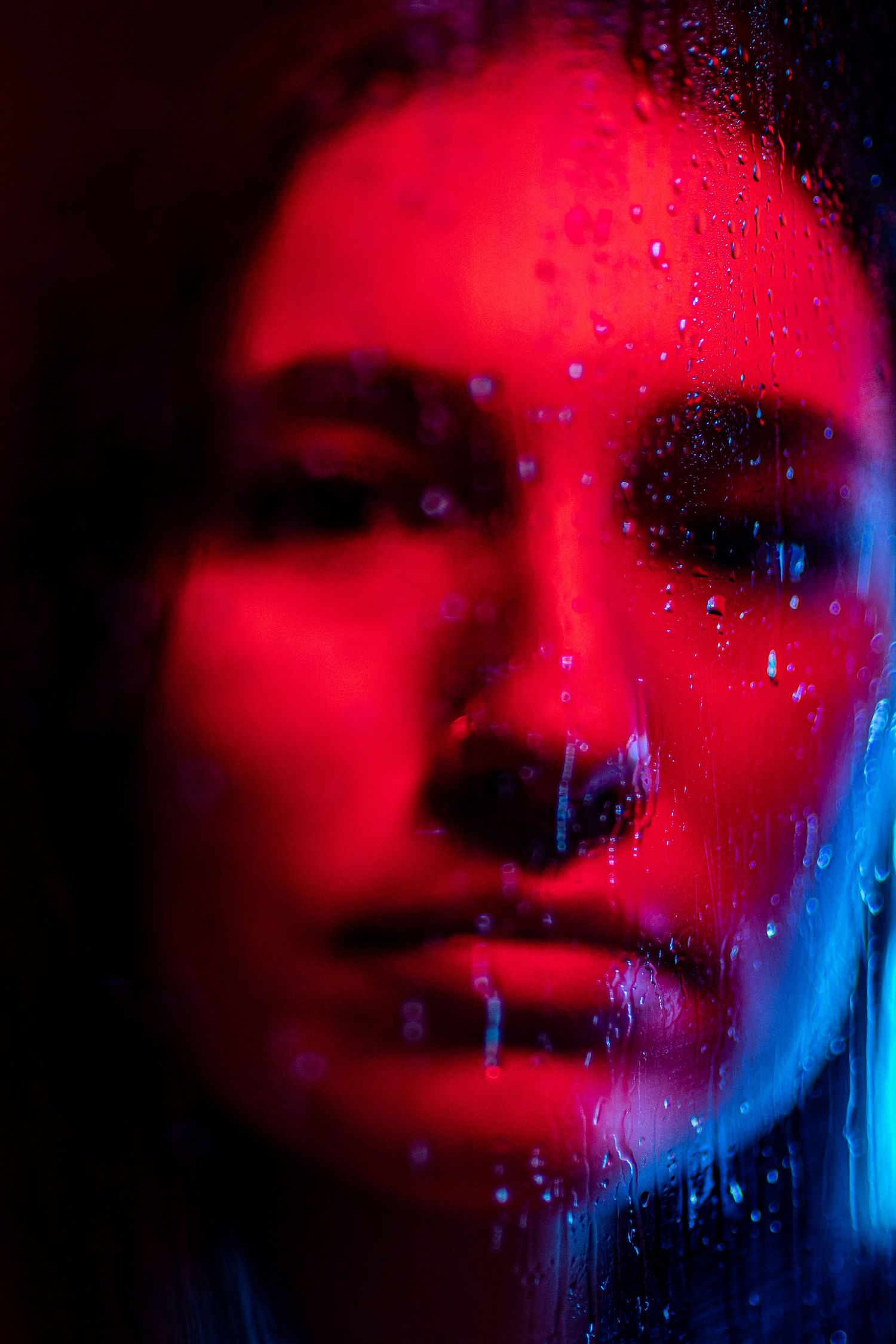
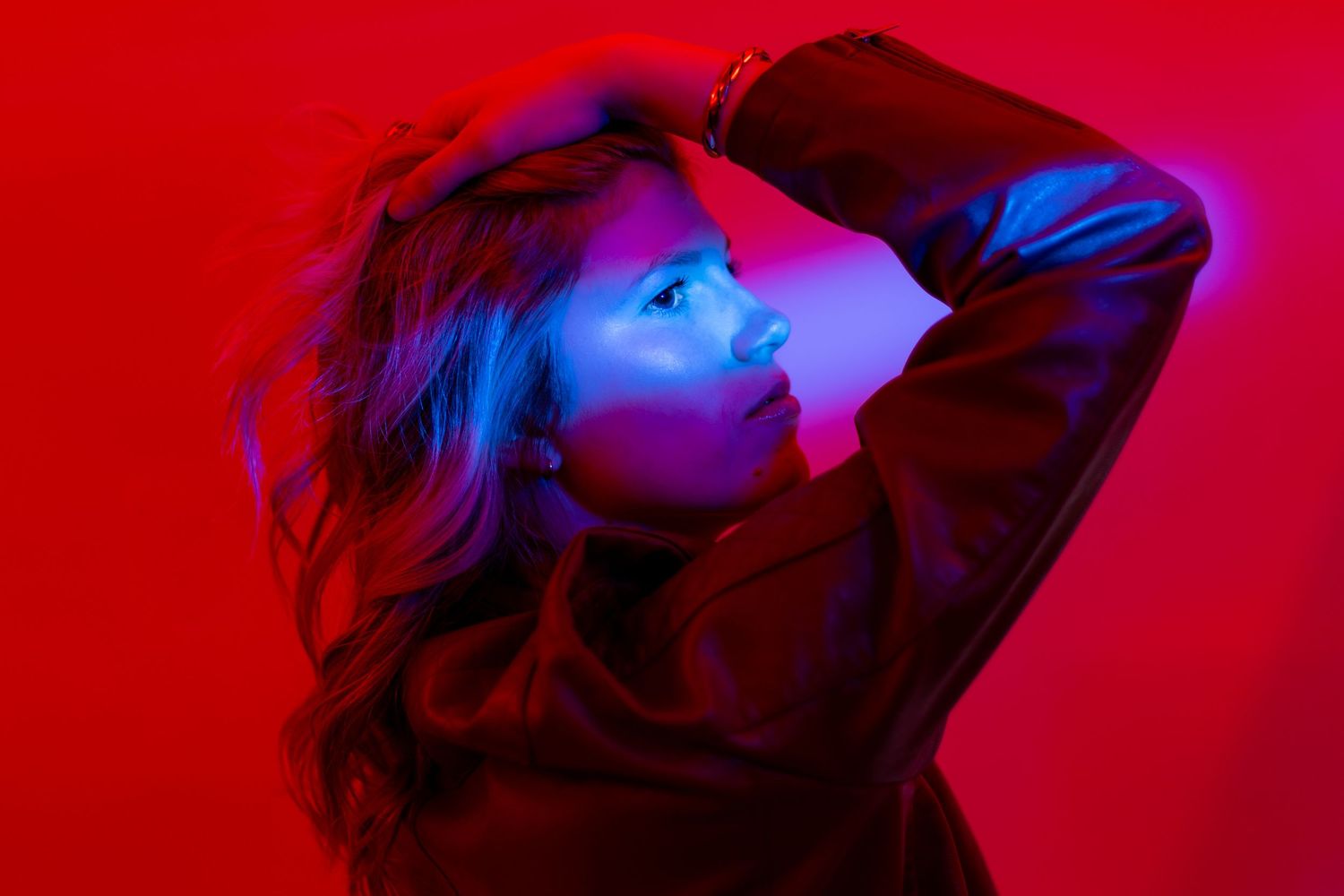
One of my favorite ways to photograph portraits is by using color contrast. I’m talking about gels on a flash to create bold, clean color that feels editorial, dramatic, and totally unique. When it’s done well, the light doesn’t just make a portrait look “cool”… it shapes the face, carves out detail, and turns a simple setup into something that looks like a poster.
How I Got Into Colored Light
About two years ago, I started experimenting with LED light bars. They were an easy entry point into color because you can see the results in real time and start learning how different hues interact on skin. Pretty quickly, I realized something important: if you want stronger color, cleaner gradients, and more control, gels on a flash are hard to beat.
Gels are basically colored transparent films you place over a flash. Because a flash has a lot more power than most continuous lights, the colors can come out more intense and more “solid,” especially when you’re working in a darker environment and letting the gelled light do most of the work.
Why Color Contrast Works So Well for Portraits
What I love most about this style is that it forces the viewer to actually see the subject. A lot of portraits rely on soft, flattering light to smooth everything out. This is the opposite. Color contrast creates structure. It gives the face edges, depth, and separation.
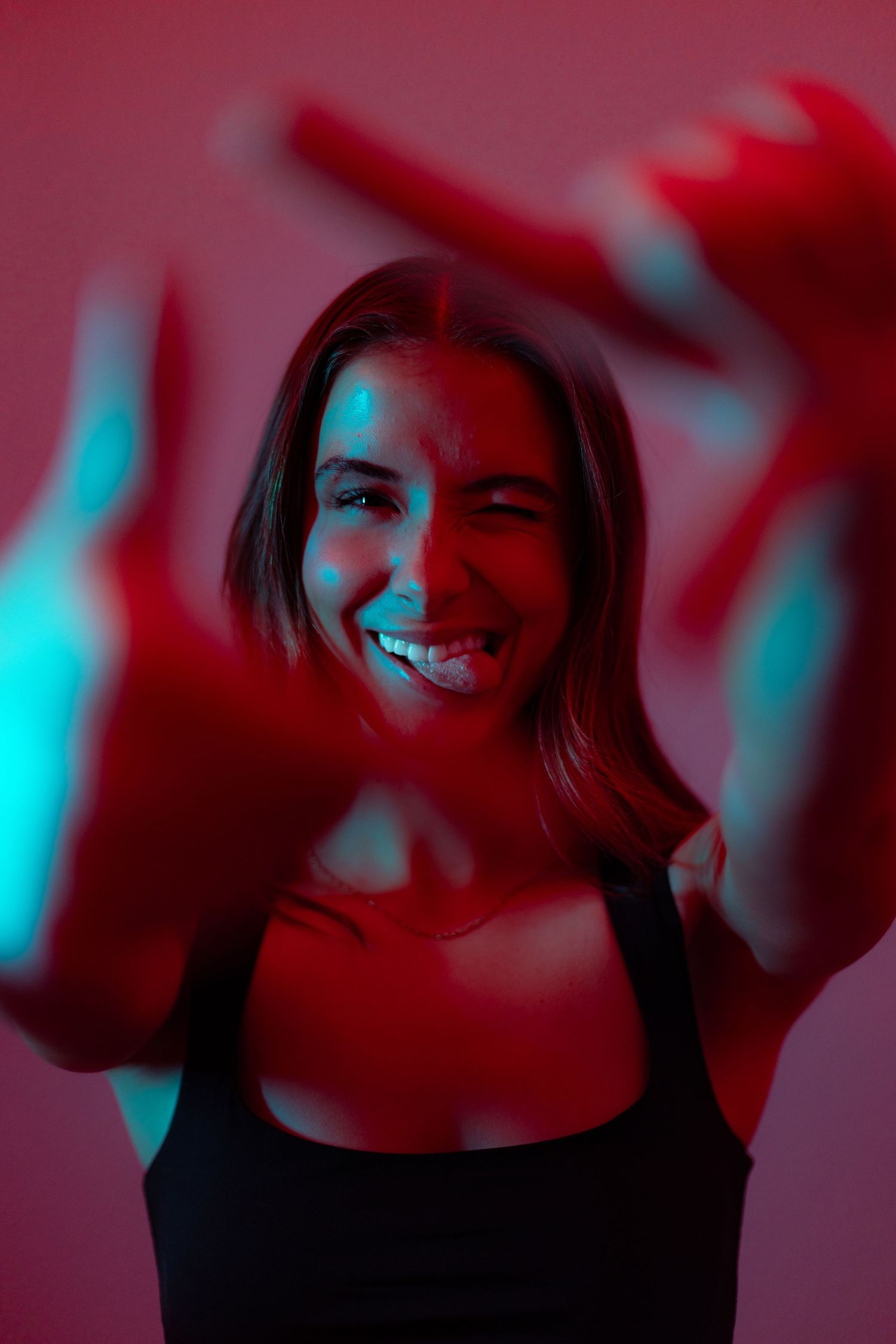
When you light from different sides with different colors, each side of the face competes in a really interesting way. The colors meet in the shadows and blend into unexpected tones, which makes the features pop even more. Even when someone is looking straight into the camera, you can still read their profile and bone structure because the light is carving the face into clear planes.
It’s bold. It’s graphic. And it’s honestly stunning.
The Look: Clean, Editorial, and Intentional
This is one of those techniques that can turn a simple portrait into an entire set with a consistent vibe. The more consistent your color palette is, the more it feels like a series rather than a random collection of images.
I usually think about it like design:
limited color palette (2–3 colors max)
strong separation between light and shadow
clean composition so the lighting stays the main idea
intentional wardrobe choices that don’t fight the color
When all of those pieces click together, the images start to feel cinematic and high-end.
My Custom Modifiers (and That Strip of Light You’ve Seen)
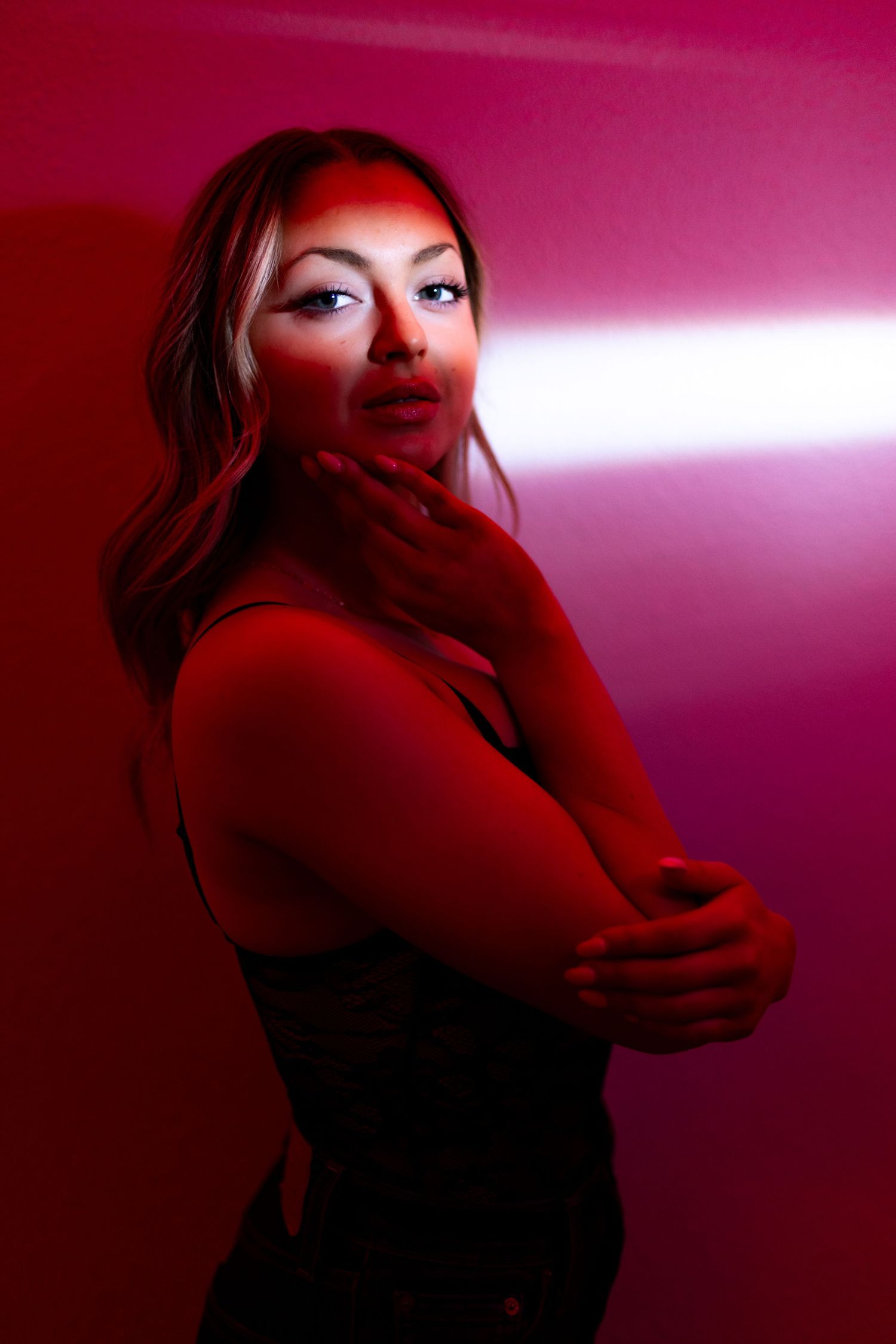
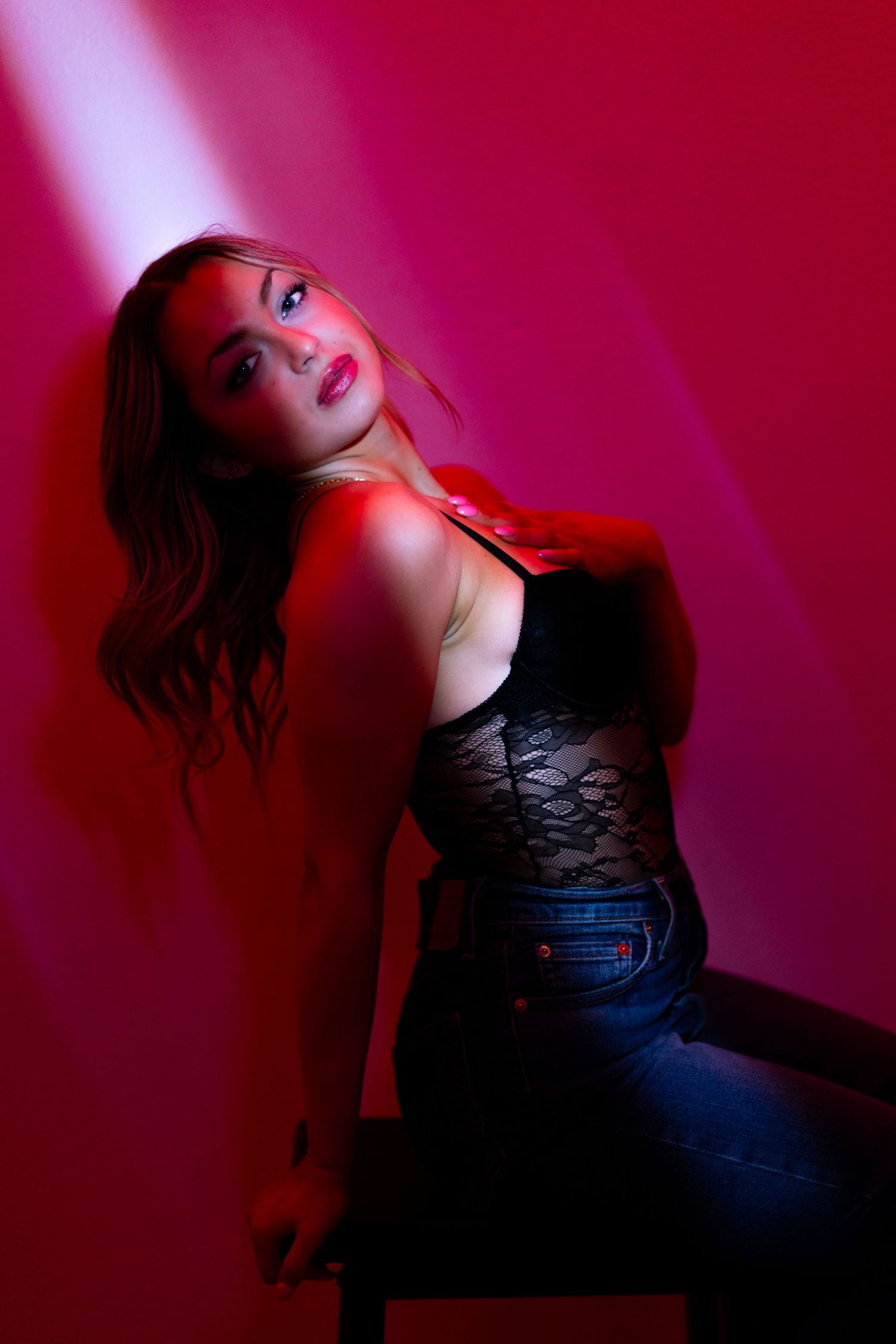
Recently I’ve been building light modifiers specifically for this gel work. If you’ve seen a strip of light cutting through the middle of a model’s face, or a sharp line of color wrapping along the side of their body, that’s not an accident.
I’ve been using foam core and cutting narrow slits into it to control spill. The board blocks most of the flash, and only lets a thin slice of light through. That restriction makes the light feel precise, almost like a blade, and it creates a really graphic look that works perfectly with color contrast.
The best part is how much experimentation is possible. Changing the slit width, the distance from the subject, or the angle of the flash completely changes the effect. It’s a simple build, but it opens up a ton of creative options.
I’m continuing to build new modifiers and push this technique further. I want to test more color combinations, experiment with softer blends versus harder edges, and keep refining how the light wraps around different face shapes and body angles. I’ll be sharing more results as I go, because this has become one of my favorite ways to create portraits that feel truly stylized.
If you’re someone who wants portraits that feel bold, editorial, and different from the standard “safe” look, this is one of the coolest ways to do it. Let’s build something loud.
Want to Shoot a Color Contrast Session in Spokane?
If you’re interested in an editorial gel session, reach out and tell me the vibe you want. Send a couple reference images, a color palette you love, or even just a mood (clean, dramatic, neon, cinematic), and I’ll help plan the lighting, wardrobe, and overall concept.